If you love the sport, then you know that keeping your tackle and tools in order can make or break a day on the water. In this article, we’re taking a deep dive into hobby organization—specifically how to store fishing gear efficiently. We just covered how to organize fly tying materials, but now it’s time to step back and look at the bigger picture: rods, reels, tackle boxes, waders, nets, and everything else that ends up scattered around the garage or truck bed.
When you store fishing gear thoughtfully, you’re not just cleaning up your space—you’re building systems that make every trip smoother (check out this article on another blog about fishing trip efficiencies to help get your brain in gear for this sort of thing). The more organized you are at home, the faster you can load up, the less likely you are to forget something, and the more time you get to actually fish. Let’s dig into how to set up a practical, durable, and easy-to-maintain storage system that keeps your gear ready for the next cast.
This article contains Amazon Associates links. As an Amazon Associate, we earn from qualifying purchases at no additional cost to you.
How to Store Waders and Wading Boots
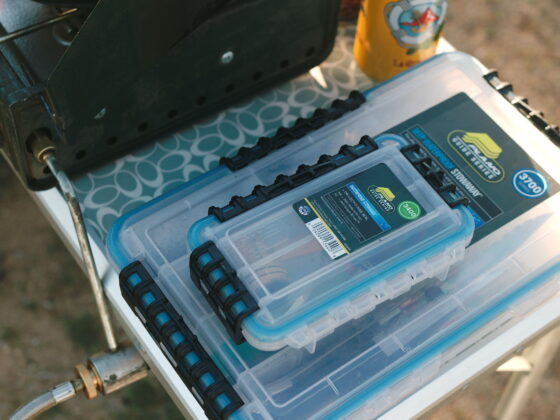
Waders and wading boots are bulky, awkward, and always seem to end up in a heap somewhere. The key is to keep them together and contained once they’re dry. Instead of hanging them up or leaving them in a corner, try storing them in something like a milk crate—or better yet, an extra-deep milk crate that can handle the size and weight. Another great option is a Plano Sportsman’s Trunk that you’ve drilled a some holes into for ventilation.
This setup makes it easy to keep your wading gear organized and portable. Everything stays in one place, and when it’s time to hit the water, you can just grab the crate or trunk and go. The only rule is to make sure both your waders and boots are completely dry before stowing them, and that the container allows for airflow. Adequate ventilation helps prevent mildew and that musty smell that can build up over time, keeping your gear fresh and ready for the next trip.
How to Store Fishing Poles and Fly Rods
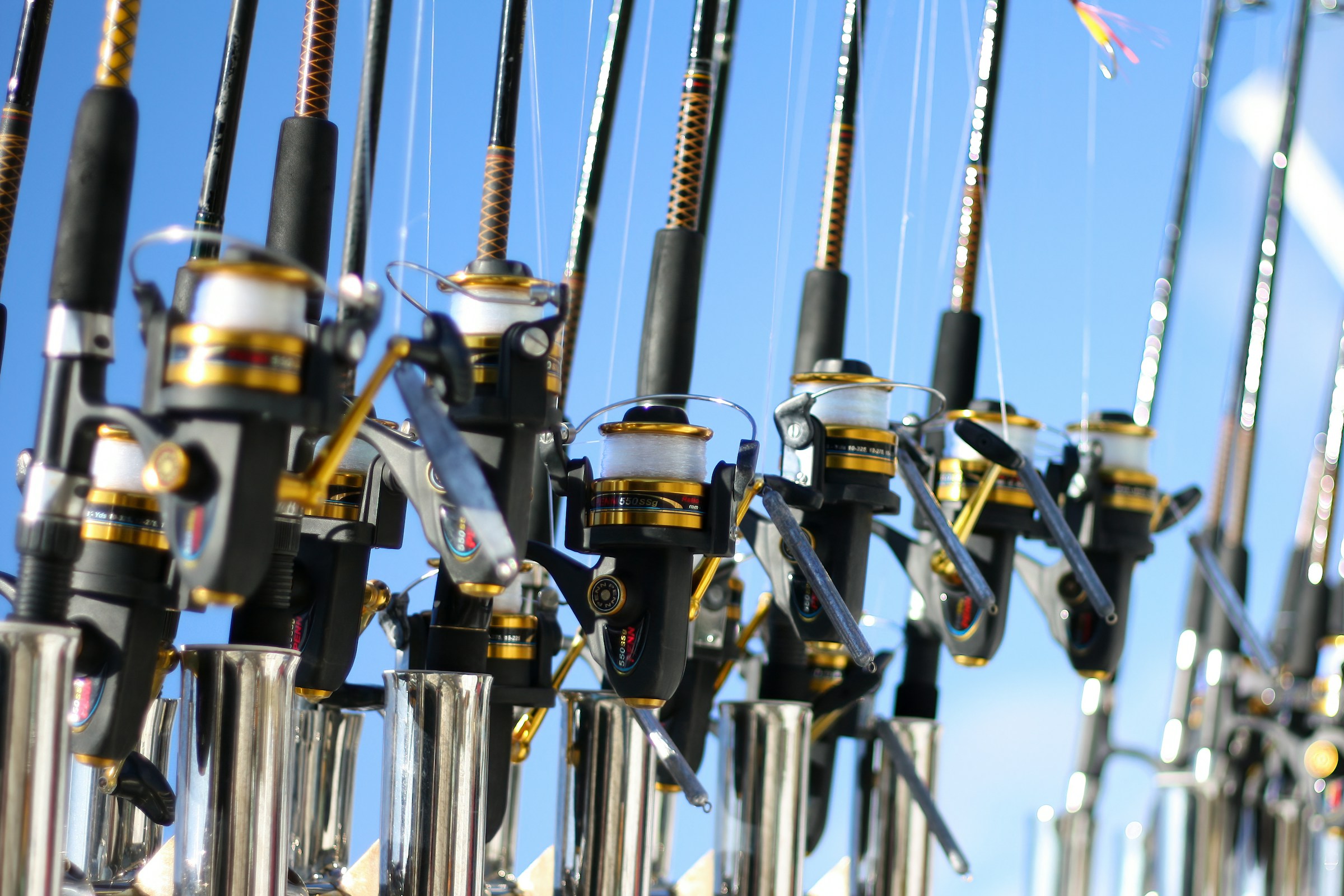
Fishing rods are one of the trickiest pieces of gear to store neatly, especially if you have a mix of spinning, casting, and fly setups. The best approach depends on how many rods you own and how often you use them. For most anglers, a horizontal wall rack or ceiling rack is the most space-efficient option; this option from Ghosthorn looks great, and is able to be mounted in a few different ways. Mounting a simple rod rack along a garage wall keeps rods protected from getting stepped on or crushed, while ceiling-mounted racks take advantage of otherwise unused space. Both methods help prevent warping and damage to guides or tips.
If you’re frequently grabbing a few rods for quick trips, a freestanding vertical rack can make more sense. It keeps everything visible and accessible, so you can select the right setup without digging through a pile. Some anglers even repurpose PVC pipes or foam blocks to create inexpensive custom racks that perfectly fit their rods and reels.
If you don’t have room for a freestanding rack, a wall-mounted vertical rack looks great and keeps things together, so you can just grab and go. https://amzn.to/3WxwCEb
No matter how you choose to store them, make sure your rods are clean and dry before putting them away. Avoid leaning them in corners or against walls, which can (apparently) cause them to bow over time. Keeping them elevated, evenly supported, and away from heat sources or direct sunlight will extend their lifespan and keep your setups ready for the next cast.
How to Organize Tackle Boxes and Other Random Gear
Tackle boxes can quickly become chaotic if you don’t have a system, especially when you’re juggling multiple species or techniques. The best way to stay organized is to dedicate each box to a specific category—bass lures in one, trout flies in another, terminal tackle in a third. Use dividers to separate small items like hooks, swivels, and weights, and label each box clearly so you can find what you need without digging. A tackle backpack or soft-sided bag that holds multiple boxes can also help consolidate everything in one grab-and-go system for the boat or truck. Of course, our favorite Sportsman’s Trunks also excel at this.
For extra reels, spools of line, and smaller items, it helps to go beyond the standard tackle box. Small organizers from Akro-Mils are especially handy for keeping extra lures, hooks, and terminal tackle neatly sorted. They’re stackable, come in various drawer sizes, and make it easy to see what you have at a glance. For reels, use padded pouches or wrap them in microfiber cloths to prevent scratches, and store them with a light coat of oil on the moving parts. Line should be kept out of direct sunlight and extreme heat—an opaque bin or drawer helps protect it from UV degradation. You can also use a plastic stand-alone drawer system, such as those from Sterilite.
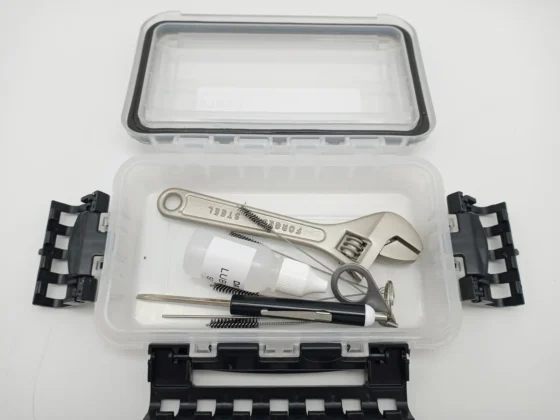
If you have room, create a small “maintenance station” in your garage or shop. A dedicated drawer or shelf for tools, spare parts, and lubricants can make it easier to keep everything in working order. The goal is to know exactly where each item lives, so when it’s time to tie on a new leader or swap reels, you can do it quickly and get back to fishing. As always, we recommend judicious use of a labelmaker to keep you organized and to keep your system repeatable and thought-free.
Conclusion: Best Ways to Organize and Store Fishing Gear
Staying organized isn’t just about keeping your fishing gear tidy—it’s about cultivating a mindset that makes every trip more enjoyable. When your rods, reels, and tackle all have a place, you eliminate stress and wasted time before you even leave the house. That kind of preparation carries over to the water, where you can focus on what matters most: reading the current, watching for hatches, and being fully present in the moment.
It also builds efficiency over time. Once you get into the habit of putting things back where they belong, you’ll start to notice patterns—what gear you actually use, what needs replacing, and what you can leave behind next time. A well-organized system helps you travel lighter, fish smarter, and avoid those frustrating mornings spent searching for a missing spool or your favorite lure when prime fishing hours are melting away.
The whole purpose of this article is to help you stay organized so you can spend more time fishing and less time tripping over piles of crap in your garage. Whether it’s a simple wall rack, a few labeled crates, or a full storage setup, the goal is the same: make your space work for you. When everything has its place, getting ready becomes effortless—and that means more time on the water, where folks like us belong.